Refrigerator Freezing Food in the Fresh-Food Section? What's Miscalibrated
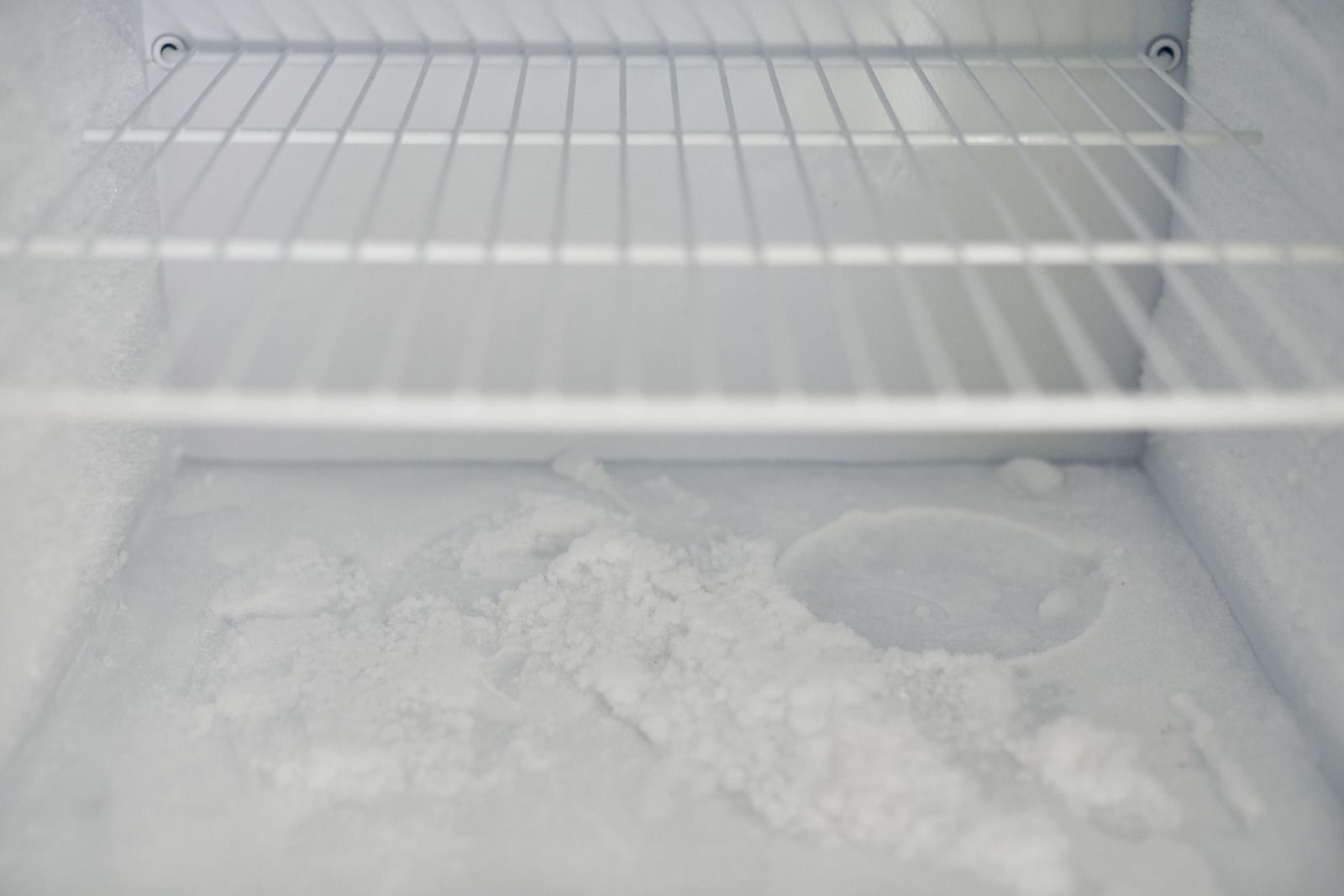
Quick Answer: A refrigerator that freezes food in the fresh-food section is almost always sending too much cold air into a compartment that should stay between 37 and 40 degrees Fahrenheit. The usual suspects are a temperature setting nudged too low, a damper that has stuck open and is letting freezer-cold air pour in, a thermistor or temperature sensor reporting the wrong number to the control board, or vents blocked by food that concentrate cold air on whatever sits nearby. Where the freezing shows up first, along the back wall, on the top shelf, or scattered across every shelf, points to which one of those is miscalibrated.
You open your crisper and find a head of lettuce with ice crystals threading through the leaves. Or the milk carton on the top shelf has gone slushy overnight. The freezer's doing its job fine, but the fresh-food side is running cold enough to turn produce into frost-damaged mush.
That's not normal wear. A fridge isn't supposed to do this.
A refrigerator that freezes food has a calibration problem somewhere in the system that controls how much cold air reaches the fresh-food compartment. Here's what that system looks like, what usually slips out of calibration, and how an experienced tech tracks the freezing pattern back to the part that's actually failing.
How the Fresh-Food Side Stays Cold Without Freezing
Most refrigerators make cold air in one place, the freezer evaporator, then route a controlled amount of it into the fresh-food compartment through a duct system. A damper door opens and closes to meter how much cold air crosses over. A temperature sensor inside the fresh-food section reports back to the control board so it knows when to open the damper wider or shut it down. When every part of that loop is calibrated correctly, the fresh-food side settles into the 37 to 40 degree range that keeps produce and dairy safe without freezing them.
Freezing means that loop broke somewhere. Either too much cold air is getting in, the system doesn't actually know how cold the compartment is, or the cold air that does arrive can't circulate and pools on one shelf instead of spreading out.
Where the Freezing Shows Up First Tells You a Lot
Before you assume the worst, look at the pattern. It narrows down which part of the system is out of calibration faster than guessing ever will.
Everything is freezing evenly
If milk, produce, and leftovers on every shelf are all running colder than they should, the temperature setting itself is the first thing to check. It is a common and easily overlooked cause, especially after a family member bumps the dial or a touch control gets nudged during cleaning.
Freezing concentrated near the back wall
The rear of the fresh-food compartment usually sits closest to the duct that feeds in cold air from the freezer side. Items stored directly against that wall are the first to freeze even when the rest of the compartment reads normal, which points toward a vent or damper issue rather than a bad overall setting.
Freezing on the top shelf only
Some models route cold air in near the top of the compartment, so a top shelf running noticeably colder than the shelves below it suggests uneven airflow, often from a vent that is blocked or a damper not closing all the way once the compartment reaches temperature.
Freezing that comes and goes
An intermittent pattern, cold enough to frost overnight but fine by afternoon, often points at a sensor or control board that is reading the temperature incorrectly rather than a mechanical air-path problem.
The Temperature Setting Is Miscalibrated
The most common cause is also the simplest one to fix. Most refrigerators come factory set with a fresh-food target around 37 degrees Fahrenheit, and a workable range generally runs from about 33 to 40 degrees. Set the dial or digital control colder than that and items with high water content, lettuce, celery, grapes, milk, start to freeze. This shows up especially overnight, once the compartment has settled at the coldest point of its cycle.
Confirm before you adjust
Check the actual control setting against your owner's manual rather than assuming. On dial-style controls it is easy for a setting to get bumped during cleaning or restocking without anyone noticing. On digital touch controls, a setting can occasionally be reset or misread after a power flicker.
Test what the compartment is actually doing
Setting numbers on a dial do not always match the real interior temperature, particularly on an older unit. A field-tested way to check is to place a glass of water on the top shelf for 24 hours, then check its temperature with a food thermometer. If the reading is more than a couple of degrees off from what the setting should produce, the setting is not the real problem, something downstream is miscalibrated instead.
The Damper Is Stuck Open
The damper is a small door, usually motorized, that meters how much cold air crosses from the freezer side into the fresh-food compartment. It opens when the fresh-food sensor calls for more cooling and closes once the target temperature is reached. Simple in theory.
How It Fails
Over years of operation, the damper motor, the linkage, or the damper door itself can stick, whether from mechanical wear, a frozen hinge point, or a control board that stops sending the close signal. When it sticks open, cold freezer air keeps flowing into the fresh-food side well past the point it should have shut off, and the compartment overcools regardless of what the temperature dial says.
Why It Concentrates Near The Vent
Because the damper sits at a specific duct opening, a stuck-open damper tends to freeze whatever is closest to that opening first, usually the back wall near the vent, before the effect spreads to the rest of the shelf.
Tip: If you can locate the vent covers inside the fresh-food compartment, listen and feel for airflow near them. A steady, cold stream of air that never seems to pause is a sign the damper is not cycling closed the way it should, and that is worth pointing out to whoever diagnoses the unit.
A Faulty Temperature Sensor or Thermistor
The fresh-food compartment relies on a small sensor, often called a thermistor, to report the actual temperature back to the control board. The board trusts that reading completely, no second opinion involved. If the sensor is drifting or has failed, it can end up running the cooling system far longer than it needs to.
What Goes Wrong
A thermistor that reads warmer than the true temperature tells the control board the compartment still needs cooling, so the board keeps calling for cold air even after the fresh-food section has already dropped well below target. The result is a compartment that overcools steadily rather than in short bursts. As far as the control board can tell, the compartment still hasn't reached temperature, so it keeps calling for cold.
Why This Pattern Is Different
Unlike a stuck damper, which tends to freeze one localized spot near the vent, a failing sensor often produces broader overcooling because the whole control loop is working from bad information. This is also the type of fault that a homeowner cannot fully diagnose with a glass of water and a thermometer, since the sensor itself is what needs testing against the control board's readings.
Blocked Vents and Overpacked Shelves
Not every freezing problem starts inside the control system. Sometimes the airflow path is the actual issue, and nothing electronic is broken at all.
Food Sitting Against The Vent
Cold air typically enters the fresh-food compartment through one or more vent openings near the back or top. Produce, drinks, or containers pushed directly against that opening sit in a steady stream of the coldest air in the compartment and will freeze even when everything else nearby reads normal.
Packed Shelves That Block Circulation
Cold air needs room to move once it enters the compartment. Shelves loaded edge to edge, or containers stacked in front of vent openings, can trap cold air in one pocket instead of letting it spread evenly, which produces the same freezing symptom as a mechanical fault without any part actually being broken.
Rearranging so nothing sits flush against a vent opening, and leaving a little breathing room between containers, resolves this cause on its own in a lot of cases. If freezing continues after you have given the airflow room to work, that is a stronger signal the cause is mechanical rather than a packing issue.
Warning: Do not force open a stuck vent cover or pry at a damper assembly to try to see it move. These parts sit close to wiring and small motorized components, and forcing a cover or linkage that will not budge can snap a mounting tab or damage a part that was otherwise still serviceable. If a vent or damper will not move by hand, leave it for a technician rather than working it loose.
The Freezer Side Can Drag the Fresh-Food Section Down With It
On many refrigerators, the fresh-food compartment and the freezer share the same evaporator and air-handling system instead of running fully independent cooling loops. So a problem on the freezer side doesn't always stay contained to the freezer.
Freezer Running Colder Than It Should
If the freezer's own control is set too cold, or its evaporator fan is running longer than it should, the extra cold air being generated has to go somewhere, and some of it gets pushed into the fresh-food side through the shared duct system.
Evaporator Fan Behavior
A fan that runs continuously instead of cycling normally keeps pushing cold air through the whole system without the usual rest periods, which can overcool the fresh-food compartment even if its own damper and sensor are functioning correctly.
This is one of the reasons a technician checks the whole air-handling system rather than just the fresh-food compartment in isolation. Fixing a damper that was never actually the problem while the freezer side keeps overproducing cold air just brings the freezing right back.
Why Getting This Recalibrated Actually Matters
A refrigerator that freezes food isn't just an inconvenience. Produce loses its texture once ice crystals rupture the cell walls, and milk that partially freezes separates and never quite returns to normal once it thaws. Beyond the wasted groceries, a system overcooling the fresh-food side is running the compressor and fans harder than they need to, which adds wear over time.
Federal food safety guidance calls for keeping the fresh-food section at 40 degrees Fahrenheit or below and the freezer at 0 degrees, with a workable fresh-food range generally running a few degrees below that ceiling. Calibration isn't just about avoiding freezing. It's about landing in that narrow band consistently, cold enough to keep food safe, not so cold it wrecks what you're trying to preserve.
Frequently Asked Questions
Why is my fridge freezing food but the freezer seems normal?
This usually indicates a fresh-food issue, such as a stuck damper, incorrect temperature setting, or faulty sensor allowing excessive freezer-cold air to enter the refrigerator compartment and freeze food.
What temperature should the fresh-food section actually be set to?
Most refrigerators should be set around 37 degrees Fahrenheit. Generally, maintaining temperatures between 37 and 40 degrees keeps food safely chilled while reducing the risk of accidental freezing inside.
Can I test whether my sensor is miscalibrated myself?
Place a glass of water on the top shelf for 24 hours, then measure its temperature. A significant difference from the selected setting may indicate a sensor or control problem.
Why does food only freeze near the back of my refrigerator?
The back wall is often closest to cold-air vents. A stuck damper, blocked vent, or food placed too close can concentrate cold airflow there, causing nearby items to freeze.
Could rearranging my shelves actually fix this?
Yes. Moving food away from vents and leaving space between containers improves air circulation. If freezing stops afterward, restricted airflow or overcrowding was likely causing the unusually cold areas inside.
Is a refrigerator that freezes food using more electricity than it should?
Possibly. A faulty sensor or stuck damper can make the cooling system run longer than necessary, increasing compressor and fan operation, energy consumption, component wear, and overall operating costs.
Restoring the Right Fresh-Food Temperature Balance
A refrigerator that freezes fresh food is usually signaling an imbalance somewhere between temperature sensing, airflow, and cooling control. The location and frequency of the freezing can help separate a simple setting or storage issue from a stuck damper, drifting thermistor, or freezer-side airflow problem. Once the underlying cause is identified and corrected, the refrigerator can maintain the steady 37 to 40 degree range needed to protect produce, dairy, leftovers, and other everyday foods from unnecessary freezing.
With 30
years of experience serving St. Louis, West County, South County, Jefferson County, and Franklin County, Appliance Repair Masters
understands how small
refrigeration control problems
can affect the entire fresh-food compartment. A careful diagnosis considers the temperature setting, sensor readings, damper operation, vent placement, and shared airflow system together rather than treating one symptom in isolation. Correcting the actual source restores balanced cooling, reduces unnecessary system strain, and helps the refrigerator preserve food consistently without creating frozen spots.