Refrigerator Leaking Water on the Floor? Where It's Coming From
Quick Answer: A refrigerator that leaks water onto the floor is almost always failing at one of a few specific points: a clogged or frozen defrost drain backing up and spilling out the front, an ice maker or water dispenser supply line dripping, a worn door gasket letting in humid air that condenses, or a cracked, misaligned, or overflowing drain pan underneath. Where the puddle shows up — front, rear, under the crispers, or by the freezer floor — is the biggest clue to which one you have. Trace the location first, then fix the source, not just the puddle.
You walk into the kitchen in your socks and step into a cold puddle spreading out from under the refrigerator. You wipe it up, and a day or two later it is back. Maybe you see a thin sheet of ice forming under the crisper drawers, or water creeping out from the bottom of the front door. Either way, a fridge that keeps leaking onto the floor is not going to fix itself, and the water is quietly working its way under your flooring while you mop.
The good news is that a leaking refrigerator is one of the more traceable appliance problems. Water follows gravity and it leaves a trail, so the location of the puddle usually points straight at the failing part. Here is how an experienced tech reads that trail, what is actually behind each type of leak, and where the line sits between a quick fix and a repair worth handing off.
Start by Tracing Where the Water Shows Up
Before you tear anything apart, pay attention to where the water actually appears. That single observation narrows the field faster than anything else.
Front-of-unit puddles
Water pooling at the front bottom, often near a corner, is the classic signature of a defrost drain problem. Melt water that should be routed to a pan underneath backs up, overflows the interior channel, and runs forward until it spills out the door. If you also find a thin ice sheet under the bottom drawers, that points the same direction.
Rear puddles
Water behind the unit usually means a supply-line or connection issue: the water line feeding the ice maker or dispenser, the inlet valve, or a loose fitting. It can also mean an overflowing or cracked drain pan sitting on the compressor shelf.
Inside the compartment
Droplets on the ceiling of the fresh-food section, water under the crispers, or condensation on the walls point toward sealing and humidity problems rather than a plumbing leak. That water eventually migrates down and out, but the root cause is air, not a hose.
Note the pattern over a couple of days before you assume anything. A leak that only appears after the ice maker cycles tells a very different story than one that pools steadily regardless of what the fridge is doing.
The Clogged Defrost Drain, the Most Common Culprit
If you had to bet on one cause, this is it. In a frost-free refrigerator, a heater melts frost off the evaporator coils on a regular cycle, and that melt water is supposed to run down a small drain, through a tube, and into a pan underneath where it evaporates. When that drain clogs, the water has nowhere to go.
How it fails
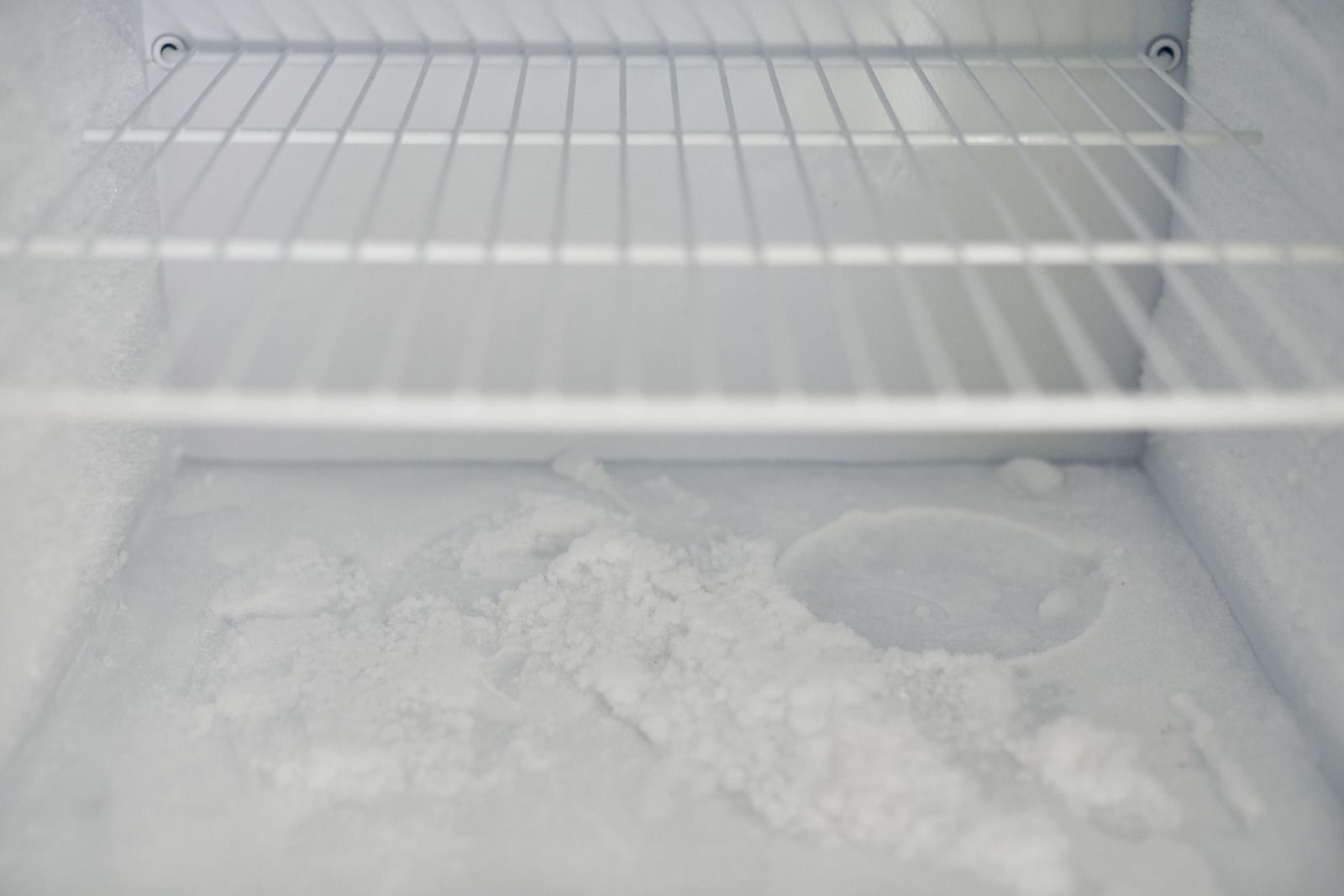
Food particles, dust, mineral buildup, or ice can clog the defrost drain, preventing water from flowing into the drain pan. The backed-up water freezes or collects beneath the drawers before eventually leaking from the refrigerator's front bottom.
Why it recurs
Leaks often return because only part of the clog was removed or the drain tube refroze. Completely clearing the drain channel and tube is necessary to restore proper drainage and prevent repeated water leaks.
Tip:
Before you spend an afternoon guessing, pull out the bottom drawers and shine a light at the back floor of the fresh-food compartment. If you see a small pool of water or a patch of ice sitting over the drain hole, you have found your leak. That single check saves a lot of disassembly and tells whoever works on it exactly where to start.
Ice Maker and Water Line Leaks
Any refrigerator with an ice maker or a door dispenser adds a set of plumbing connections, and every connection is a place water can escape.
Supply line and inlet valve
A cracked water supply line, loose connection, or leaking inlet valve can allow water to escape behind the refrigerator. Because the leak is slow and hidden, it often goes unnoticed until puddles develop beneath the appliance.
Fill tube and ice maker overflow
A partially frozen or blocked fill tube can cause water to overflow instead of filling the ice maker properly. This often creates ice buildup inside the freezer before excess water eventually drips into other areas.
Dispenser drips
A dispenser that continues dripping after use may have trapped air or a faulty water valve. Water collecting beneath the dispenser or around the door usually indicates a problem within the refrigerator's water dispensing system.
Water filter seat
An incorrect, damaged, overdue, or improperly installed water filter can leak around the filter housing. Replacing the filter on schedule and ensuring it locks securely into place helps prevent recurring water leaks.
The Door Seal and Condensation Angle
Not every leak is plumbing. Sometimes the water is condensation, and the real problem is that warm, humid room air is getting inside where it should not.
A tired gasket
The rubber gasket around the door is what keeps the cold sealed in. Over years it hardens, tears, or collects grime that keeps it from sitting flush. Once warm air sneaks past, it hits the cold interior surfaces and condenses into water that beads on the walls and ceiling and drips down. A fast field test: close the door on a slip of paper and try to pull it out. If it slides free with no resistance, the seal is not doing its job at that spot.
Humid weather makes it worse
During a muggy Greater St. Louis summer, every door opening pours moist air into the box, and a marginal gasket that coped in winter suddenly cannot keep up. That is why some leaks seem seasonal. The fix is restoring the seal, not chasing a hose that was never the problem.
Blocked airflow and overloading
Packing food tight against the rear vents or the door itself can hold the door slightly ajar or disrupt airflow, both of which encourage condensation and frost that later melts into a puddle.
Warning: Water and electricity share the space at the bottom of a refrigerator, so treat a floor leak as more than a mopping chore. Standing water near the compressor, wiring, or an outlet is a genuine shock and slip hazard. Wipe up spills promptly, and if water is pooling near electrical components or the leak is heavy and you cannot find the source, turn the unit off at the outlet and have it looked at before you keep running it.
Why a Leak Is Worth Chasing Down Now
It is tempting to keep a towel by the fridge and treat the puddle as a chore. The problem with waiting is what the water does while you ignore it.
Slow, repeat leaks wick under vinyl, laminate, and hardwood, swelling seams and lifting flooring long before you see obvious damage. Trapped moisture under and behind the unit breeds a musty smell and mold. And a leak that comes with poor cooling is telling you the defrost system or the sealed system is struggling, which is a bigger repair the longer it runs. Keeping food at a safe temperature, generally 40 degrees or below, gets harder when frost and drainage problems compound. Tracing a leak to its source early is almost always the smaller job.
Frequently Asked Questions
Why does my refrigerator leak water only from the front bottom?
Front-bottom leaks usually indicate a clogged or frozen defrost drain. Water backs up inside the refrigerator, collects beneath the drawers, and eventually flows onto the floor. Clearing the drain and tube typically resolves the problem.
Can a leaking refrigerator stop on its own?
Not usually. A temporary pause often means the blockage shifted or refroze, but the underlying issue remains. Without repairing the actual cause, the leak is likely to return and potentially worsen over time.
Is the water on my floor coming from the ice maker?
It could be. A damaged water supply line, leaking inlet valve, or frozen fill tube can allow water to escape beneath the refrigerator, especially if puddles appear shortly after the ice maker cycles.
Could a bad door seal really cause a puddle on the floor?
Yes. A damaged or dirty door gasket lets humid air enter, creating condensation inside the refrigerator. Excess moisture eventually drips onto the floor, especially during humid weather, until the seal is repaired.
Should I unplug my refrigerator if it is leaking?
Yes. Unplug the refrigerator before cleaning or inspecting the leak. If water is near electrical components or the leak is severe, keep the unit off and arrange professional service before using it again.
How can I keep a refrigerator leak from coming back?
Keep the door gasket clean, replace water filters as recommended, ensure the refrigerator stays level, and clear clogged defrost drains promptly. Addressing small leaks early helps prevent recurring puddles and costly floor damage.
Reading the Trail and Getting It Dry for Good
A refrigerator leaking water onto the floor is rarely a mystery once you follow where the water lands. A front-corner puddle points at the defrost drain, a rear puddle at the water line or drain pan, and interior droplets at the door seal and humidity. The puddle is only the symptom; the fix is at the source, and clearing a drain the right way or reseating a pan is what stops the mopping for good instead of for a week.
Schedule a refrigerator leak diagnosis — A leak spreading across your kitchen floor is quietly working under your flooring and can signal a defrost drain, water line, or drain-pan problem that only gets worse the longer it runs. With 30
years of experience serving St. Louis, West County, South County, Jefferson County, and Franklin County, Appliance Repair Masters
traces the leak to its exact source—whether it's a clogged drain, frozen tube, worn gasket, or cracked pan—and repairs it correctly. Backed by licensed, insured, BBB-accredited service for Bosch, LG, Whirlpool, Samsung, and every major brand, reach out today to book your service and get a dry, dependable refrigerator back.