Ice Maker Not Making Ice or Jamming Up? What to Check
Quick Answer: An ice maker that stops making ice or keeps jamming usually has one of five problems: the shutoff arm or switch is in the off position, the water supply is restricted by a kinked line or a clogged filter, the freezer is running too warm for the harvest cycle to start, ice has fused into a block that holds the ejector arm in place, or a part such as the water inlet valve, mold thermostat, or ice maker module has failed. Start with the free checks first, then call a technician if the basics are fine and the ice still does not come.
You reach into the bin for ice on a hot afternoon, and your hand finds a few sad cubes stuck together in a clump. Yesterday the bin was full. Tonight your glass of tea is going to be warm, and you are not sure whether the problem is a ten second fix or a part that needs to be replaced.
Ice makers are simple machines doing a surprisingly busy job. Every cycle they have to fill a small mold with the right amount of water, wait for it to freeze, warm the mold just enough to release the cubes, sweep them into the bin, and then stop when the bin is full. When any one of those steps stalls, you get no ice, small hollow cubes, or a jam that locks the whole assembly.
Here is how we sort it out in the field, starting with what you can check yourself in a few minutes and working toward the failures that need a trained hand.
Start With the Simple Things You Can Check in Two Minutes
Plenty of ice maker calls end with a switch or an arm that was nudged out of place. Before you assume a part has failed, look at these.
Check The Power Switch Or Shutoff Arm
Check the ice maker's shutoff arm or switch near the bin. Lower a raised arm, turn the switch on, and allow several hours.
Look At The Bin Itself
Remove and reseat the ice bin properly. Many ice makers require correct bin positioning to activate the level sensor and begin producing ice.
Make Sure The Ice Maker Is Actually Connected To Water
Check that the refrigerator's water supply valve is open and the line is not pinched. Without water, the ice maker cannot produce ice.
Give A New Or Reset Unit Time
After outages, installation, or reconnecting water lines, allow up to 24 hours for production. Discard initial batches if air remains in the line.
Water Supply Problems Are the Most Common Hidden Cause
If the switch is on, the bin is seated, and the arm is down, the next place to look is the water coming in. An ice maker needs a steady flow at normal household pressure. A trickle gives you tiny, hollow, or partial cubes, and no flow gives you nothing.
A Clogged Or Old Water Filter
Filters collect sediment and minerals, restricting water flow to dispensers and ice makers. Replace filters approximately every six months and ensure proper installation.
A Kinked Or Crushed Supply Line
Inspect tubing behind the refrigerator for sharp bends or flattened sections. Restricted water flow can prevent the ice maker from filling properly.
Low Household Water Pressure
Insufficient household pressure may prevent the inlet valve from opening fully. Check other fixtures and investigate shared softeners or filtration systems.
A Water Inlet Valve That Is Not Opening
Mineral buildup or a failed electrical coil can prevent the inlet valve from supplying water. Technicians test electrical continuity and outlet flow.
Tip: If your ice maker has a fill tube that leads to the mold, shine a flashlight at it. A tube with a ring of ice at the opening is a sign of a slow drip freezing on contact, which usually points to a weak inlet valve or a freezer that is running warmer than it should.
When the Freezer Is Too Warm for the Ice Maker to Cycle
An ice maker does not just freeze water. It also watches temperature. The mold has a thermostat that tells the machine when the water has frozen solid enough to harvest. If the freezer compartment is warmer than the ice maker expects, the mold never reaches that point, the harvest cycle never starts, and you get slow or empty production.
Most freezers hold best around zero to five degrees Fahrenheit. When the freezer climbs well above that range, ice makers commonly stop working before you ever notice food softening. That makes the ice maker an early warning system.
Check The Freezer First
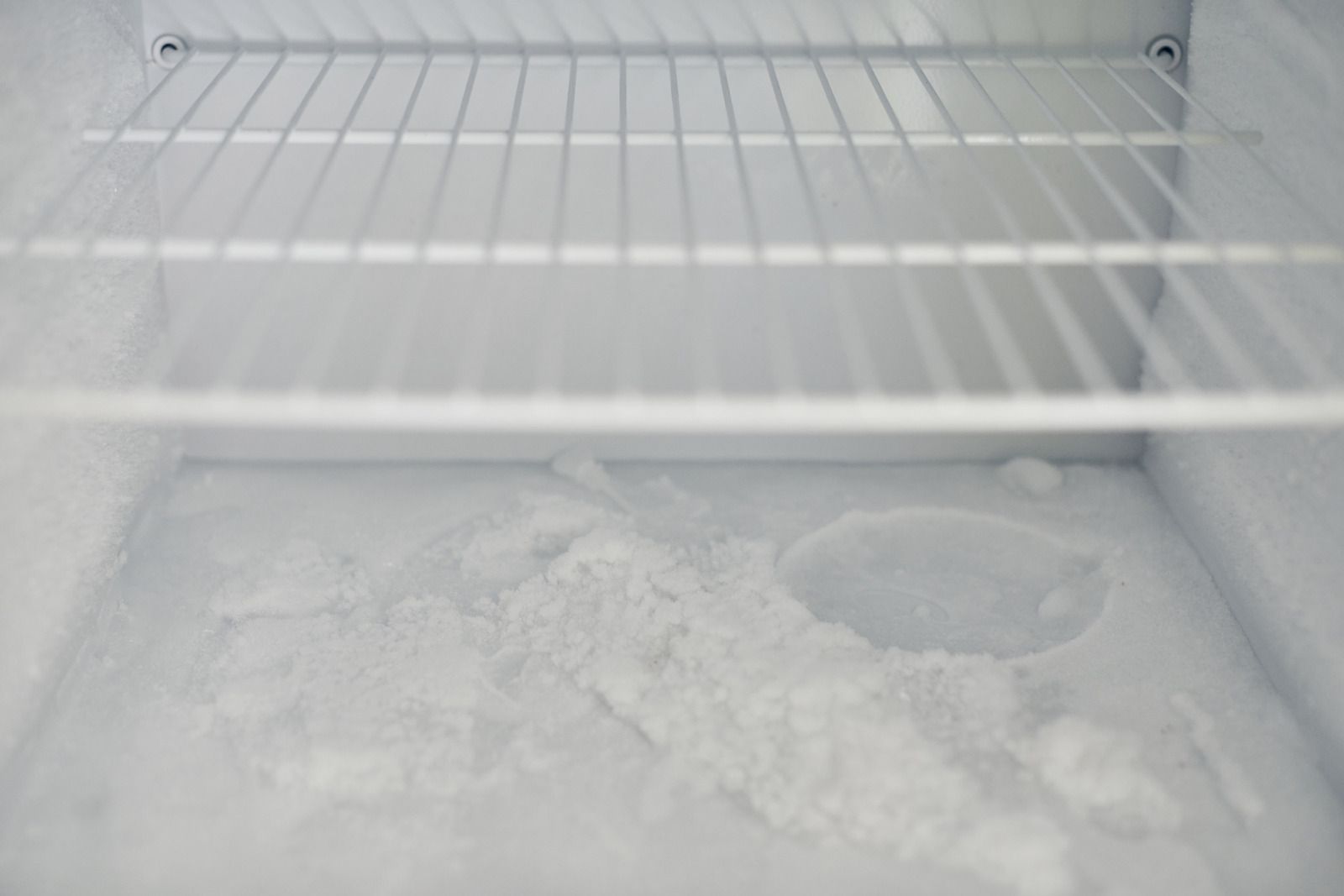
Soft ice cream, back-wall frost, or clumped, refrozen cubes suggest freezer temperature problems. The ice maker may be a symptom, not the cause.
Watch For Door Seal Trouble
Worn door gaskets allow warm, humid air inside, raising temperatures around the ice maker and introducing moisture that causes ice cubes to stick together.
Think About Airflow
Overfilled freezers can block cold-air vents and disrupt ice production. Move items away from vents and the back wall to improve circulation.
Why Your Ice Maker Jams and Cubes Fuse Into a Block
A jam is a different problem from no ice, and it has different causes. Instead of nothing happening, the ice maker has made ice but cannot release it.
Cubes Melt And Refreeze
Temperature fluctuations or frequent summer door openings partially melt cubes before refreezing them together, creating solid blocks the ejector cannot release.
Ice Builds Up Around The Ejector Arm
Misplaced cubes can wedge the ejector arm or auger, stopping movement. The motor may hum normally while the mechanism remains jammed.
Too Much Water In The Mold
A faulty inlet valve may overfill the mold, freezing excess water into sheets or slabs that jam the ejector and spill into the bin.
A Partly Frozen Chute On Dispenser Models
Melted ice can refreeze inside the dispenser chute, blocking the opening and preventing cubes from dropping even when production continues.
Clear Jams Safely
Use a plastic spatula or your hands, never metal tools. Let the ice loosen, empty the bin, and restart the ice maker.
Warning: Always turn the ice maker off, or unplug the refrigerator, before you reach into the mold area to clear a jam. The ejector arm and the heater under the mold can start moving or warming without notice, and the wiring near the mold is easy to damage with a sharp tool.
Parts That Fail Inside the Ice Maker Itself
If the water supply is fine, the freezer temperature is right, and there is no jam, a part inside the ice maker has likely quit. These are the usual suspects.
The Mold Thermostat
This sensor detects freezing completion. If faulty, the ice maker may never harvest or release water instead of frozen cubes.
The Heater Under The Mold
The heater briefly warms the mold, releasing cubes. When it fails, ice remains stuck, leaving a full mold that never empties.
The Ejector Motor And Gear Train
Worn plastic gears can prevent the ejector arm from moving. You might hear humming or clicking without cubes being released.
The Ice Level Sensor Or Control Board
A faulty sensor or control board may misread bin levels, stopping production unnecessarily or allowing the ice bin to overfill.
The Full Ice Maker Module
When multiple internal components fail together, replacing the complete ice maker module can provide a practical solution for restoring reliable production.
These parts sit close to wiring and water, which is why testing them takes a meter and some experience. A guess here can lead to replacing a part that was working while the real fault sits one step upstream.
What a Technician Checks That You Cannot See
When we arrive for an ice maker call, we do not start with the part we expect to replace. We follow the sequence the machine follows.
First we confirm the freezer temperature with a thermometer rather than relying on how cold it feels. Next we check the water at the inlet valve and at the fill tube, measuring flow rather than assuming it. Then we test the mold thermostat, the heater, and the motor, and we run the ice maker through a forced cycle to watch each step happen. Along the way we look at the door gasket, the airflow vents, and the filter, because a problem in one of those can mimic a failed part.
That process matters because ice makers are good at pointing you in the wrong direction. A weak inlet valve looks like a bad mold thermostat. A warm freezer looks like a dead module. Following the full chain is how you end up repairing the right thing once.
Frequently Asked Questions
Why is my freezer frosting up so much faster than it used to?
Usually the heater, thermostat, or timer has stopped working, so frost no longer melts off between cooling cycles. A worn door gasket can cause the same fast buildup without any part failing.
Is it normal for a chest freezer to have frost inside it?
Some frost is normal on manual defrost chest freezers and should be cleared once it reaches about a quarter to half an inch. Fast, heavy buildup earlier usually points to a lid seal problem.
Can I keep using my freezer while frost keeps building?
Briefly, but heavy frost blocks airflow around the coils and makes the compressor work harder, which can warm the compartment and harm food quality. Identify the cause before the buildup gets severe.
How can I tell if it’s the heater or the thermostat that’s failing?
Both cause heavy frost on the coils, so testing each part is the only reliable way. A technician usually checks the heater’s continuity first, then the thermostat and timer or control board.
Will cleaning the door gasket fix frost that’s already built up?
Cleaning the gasket can stop new frost from a poor seal, but it will not melt existing buildup. A full manual defrost or repair of the failed part is usually needed first.
Getting Your Ice Maker Cycling Again
An ice maker that stops making ice or keeps jamming is telling you something specific. The shutoff arm, the water supply, the filter, the freezer temperature, and the parts inside the mold each leave their own clues, and following them in order is how you avoid replacing parts that were never the problem. Start with the checks you can do at home, let the pattern of what you find guide the next step, and much of the time the fix turns out to be simple.
When the basics check out and the ice still does not come, the trouble usually sits in a part that needs a meter and a trained eye to catch, since one weak component often mimics another. Appliance Repair Masters
has spent 30
years diagnosing ice makers and refrigerators across St. Louis, West County, South County, Jefferson County, and Franklin County, learning how these machines point toward the wrong fault. That experience is what turns a bin of fused cubes into a repair done right the first time.